
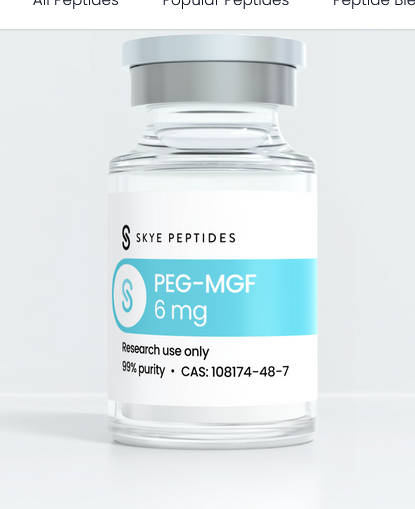
PEG-MGF 6 mg
£89.00
Now shipping: Batch PMG26-05-001 99.9% purity | 6.2 mg
CAS Number: 108174-48-7 
Molecular Formula: C₁₂₁H₂₀₀N₄₂O₃₉
Molecular Weight: ~2867.15 g/mol
Appearance: White Powder
Storage: 2-8°
Purity: ≥99%
PEG-MGF — Pegylated Mechano Growth Factor for Research Applications (UK Supply)
PEG-MGF (pegylated Mechano Growth Factor) is a high-stability, research-grade peptide used in laboratory studies focused on muscle cell signalling, growth factor expression, and cellular response to mechanical stress. In UK research environments, it is commonly explored in controlled in-vitro and tissue-based models investigating repair pathways, adaptive cellular signalling, and regeneration-related biological processes.
The pegylation process enhances peptide stability and extends functional duration under laboratory conditions, supporting more consistent experimental exposure and reproducible results in advanced research designs.
Key Facts About PEG-MGF
| Feature | Details |
|---|---|
| Compound Type | Pegylated research peptide |
| Research Focus | Muscle signalling and repair pathway studies |
| Form | Lyophilized peptide powder |
| Stability | Enhanced via pegylation |
| Storage | Refrigerated or frozen environments recommended |
| Applications | Growth factor signalling and cellular adaptation research |
| Intended For | UK universities, biomedical labs, and research institutions |
Research Uses
PEG-MGF is commonly used in UK laboratory research for:
- Muscle cell response to mechanical stress models
- Growth factor expression and signalling pathway studies
- Tissue repair and regeneration mechanism research
- Cellular adaptation and recovery investigations
- Experimental models of strain-induced cellular responses
Advantages for Laboratory Research
- Pegylation enhances stability and experimental consistency
- Supports controlled, repeatable exposure in research models
- Suitable for a wide range of cellular and tissue studies
- High-purity formulation for reliable laboratory outcomes
- Ideal for advanced investigation of growth factor pathways
Why Choose PEG-MGF in the UK?
PEG-MGF is selected by researchers for its enhanced stability and relevance in studies of muscle signalling and cellular adaptation. Its pegylated structure provides improved experimental consistency, making it suitable for structured laboratory investigations into growth factor activity and tissue response mechanisms.
In UK research settings, it is valued as a dependable tool for exploring cellular repair, mechanical stress responses, and regenerative pathway signalling under controlled scientific conditions.
Be the first to review “PEG-MGF 6 mg”
Related products


Buy peptides UK
Reviews
There are no reviews yet.