


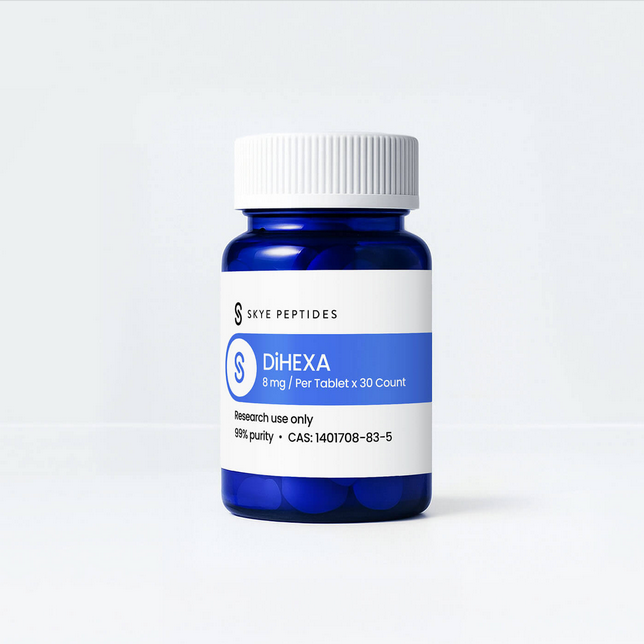
Dihexa 8 mg (30 tablets)
£119.00
Now Shipping: Batch O1DXA25
Dihexa 8 mg tablets x 30 count
CAS NO: 1401708-83-5
Molecular Formula: C27H44N4O5
Molecular Weight: 504.67 g/mol
Appearance: white tablet
Storage: room temperature in a cool, dry place
Dihexa Peptide — Cognitive & Neurogenic Research Compound (UK Supply)
Dihexa peptide is a high-purity, research-grade compound widely studied in laboratory settings for its potential involvement in neurogenesis, synaptic plasticity, and cognitive signalling pathways. In UK neuroscience research environments, Dihexa is used in controlled in-vitro and ex-vivo studies to explore neural regeneration mechanisms, brain cell communication, and pathways associated with learning and memory processes.
Supplied as a lyophilized peptide powder, Dihexa is formulated for stability, precise handling, and reproducible experimental outcomes, making it suitable for advanced research in neuroscience, neurobiology, and cellular signalling studies.
Key Facts About Dihexa Peptide
| Feature | Details |
|---|---|
| Compound Type | Synthetic research peptide |
| Research Focus | Neurogenesis, synaptic plasticity, cognitive signalling pathways |
| Form | Lyophilized peptide powder |
| Stability | High under recommended storage conditions |
| Storage | Refrigerated or frozen environments |
| Applications | Neural pathway research, synaptic signalling, cognitive function studies |
| Intended For | UK universities, neuroscience labs, and research institutions |
Research Uses
Dihexa peptide is commonly utilised in UK laboratory research for:
- Neural signalling and synaptic plasticity studies
- Neurogenesis and neuronal development research
- Cognitive pathway and memory-related mechanism investigations
- In-vitro models of neural growth and brain cell interaction
- Comparative analysis of peptide effects on neuronal systems
Advantages for Laboratory Research
- High-purity formulation for consistent and reproducible results
- Stable lyophilized form suitable for long-term research storage
- Compatible with diverse neuroscience and cellular biology models
- Supports detailed investigation of neural signalling pathways
- Ideal for advanced experimental studies in neurobiology
Why Choose Dihexa Peptide in the UK?
Dihexa peptide is selected by researchers for its consistency, structural stability, and relevance in studies of neural signalling and brain cell communication. Its defined molecular structure supports controlled experimentation in cognitive and neurogenic research models.
In UK laboratory environments, it is valued as a reliable research tool for exploring synaptic activity, neuronal growth mechanisms, and cellular communication pathways under strictly controlled scientific conditions.
For research use only. Not intended for human consumption, diagnostic use, or therapeutic applications.
Be the first to review “Dihexa 8 mg (30 tablets)”
Related products


Buy peptides UK
Buy peptides UK
Reviews
There are no reviews yet.